

مقدمة
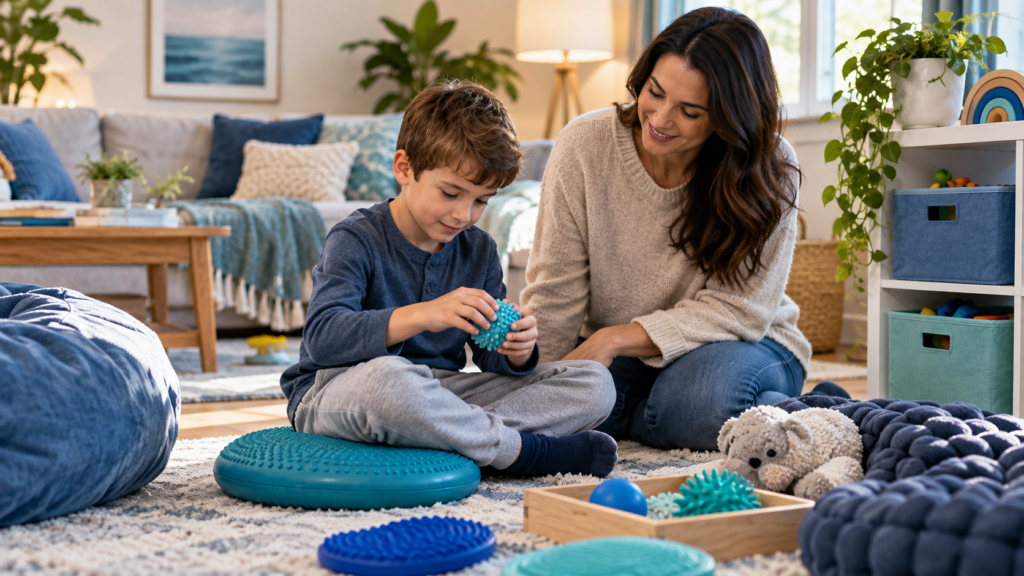
Every home has a sensory environment: light, sound, touch, movement, temperature, smells and the predictable—or unpredictable—rhythm of daily activities. For some children and adults, these sensations are easy to manage; for others, they can interfere with comfort, attention, communication, rest or participation. Supporting sensory needs does not mean removing all stimulation or exposing someone to sensations until they tolerate them. It means understanding the person’s responses and adjusting activities and surroundings so everyday life becomes more accessible.
Families, caregivers and professionals can collaborate on practical strategies. Interactive and immersive technologies may provide additional options in selected circumstances, but everyday participation and individual choice should remain the priorities.
Understanding sensory differences
People may respond differently to visual, auditory, tactile, vestibular, proprioceptive and other sensory information. Some seek movement or certain textures; others find particular sounds, lighting conditions or touch uncomfortable. Responses may vary with fatigue, stress, health, context and predictability. Sensory differences occur across many developmental and neurological conditions, but should never be inferred from a diagnosis alone.
The key is to understand what happens, when it happens and how it affects a meaningful activity. A child who struggles to get dressed may be affected by clothing textures, a hurried schedule, motor-planning demands or several factors together. A person who avoids a busy kitchen may be responding to noise, crowded spaces or task complexity—not necessarily to a single sensory stimulus.
Start with observation, participation and choice
Observe situations without turning daily life into a constant test. What activity does the person want to complete? Which sensory features appear helpful or difficult? Can the person indicate discomfort, request a break or choose an alternative? Collaborate with the person, family and relevant professionals to distinguish sensory contributors from pain, medical problems, communication barriers or environmental obstacles.
A simple log may record the activity, environmental factors, the person’s response and which changes helped. This is a communication aid, not a diagnostic instrument. Avoid labeling a child as “sensory seeking” or “sensory avoidant” based on isolated behaviour.
Everyday strategies for the home
Visual environment
Adjust glare, lighting and visual clutter when they impede an activity. Consider clear storage, predictable layouts, visual schedules and the option to work in a quieter visual field. Avoid assuming that bright colors or animated visuals automatically improve engagement.
Sound and communication
Reduce unnecessary background noise, warn before predictable loud sounds and provide accessible ways to request quiet. Headphones or hearing protection may be useful in selected contexts, but decisions should account for communication and situational awareness.
Touch and materials
Offer choices in clothing textures, bedding, grooming tools and task materials. Explain touch before it happens and respect consent and refusal. Do not use restrictive or aversive sensory exposure practices.
Movement and body position
Provide comfortable positioning, accessible furniture and movement opportunities appropriate to the person’s abilities and health. Activities involving balance, vestibular challenges or deep pressure should not be improvised when clinical risks or contraindications may be present.
Predictability and recovery
Prepare transitions, allow breaks and offer a calm space without treating it as punishment. Adjust tasks in partnership with the person instead of requiring them to tolerate an overwhelming environment.
Sensory support during daily occupations
Getting dressed: consider fabric preferences, garment design, room temperature, sequencing and timing. Offer limited choices and sufficient time.
Mealtimes: look beyond food texture alone to lighting, sound, smell, seating, communication and medical or feeding needs. Significant feeding or swallowing concerns need specialist assessment.
Play and learning: offer accessible materials and allow control over sound, speed and visual complexity. A child may learn more when distractions are reduced.
Personal care: explain the sequence of bathing, grooming or toothbrushing; adapt tools and respect signals of discomfort.
Community participation: prepare for busy environments using photographs, schedules, graded choices and an exit strategy rather than relying on forced exposure.
Digital tools: where can they help?
Digital supports may include visual routines, communication systems, adjustable interactive games, video demonstrations and therapist-guided remote follow-up. Some environments can alter the number of stimuli, the speed of activity or the type of feedback. Their value comes from making tasks understandable and manageable—not from maximizing sensory intensity.
Digital activity should complement real-world opportunities. A child’s improvement in a game does not establish better functioning in dressing, school, play or community life. Professionals should evaluate whether any changes transfer to meaningful activities.
Remotion TheraVerse: a customizable multisensory virtual room
Remotion TheraVerse explores therapist-designed virtual therapeutic environments. Within a virtual room, the therapist can place and arrange interactive objects rather than relying only on a fixed scenario. The room can include distinct forms of sensory feedback and interaction:
- Visual: objects, colors, movements, visual cues and responsive effects within the environment.
- Auditory: sounds and audio cues associated with objects or interactions.
- Tactile/haptic: vibrations through compatible controllers or devices when supported by the selected hardware.
- Multisensory combinations: visual, sound and vibration-based cues integrated into an interactive task.
- Spatial customization: the therapist positions objects and adjusts the organization and demands of the virtual room according to the therapeutic objective.
For example, a therapist may arrange a small set of virtual objects and provide visual, auditory or vibration feedback when the person interacts with them. The therapist can explore how changes in the arrangement, complexity or sensory characteristics affect engagement, response and task performance. This is not limited to a supermarket or any other predefined daily-life simulation; the virtual room itself is configurable.
Vibration is a form of haptic cueing, not a reproduction of the full richness of real-world touch, pressure or proprioceptive information. Nor does a virtual sensory room inherently constitute a validated treatment for sensory processing differences or Ayres Sensory Integration®. Its suitability, use and outcomes require individual professional assessment and appropriate evidence. The purpose is to offer clinicians a flexible environment to design and adjust meaningful interactive experiences while retaining clinical control.
Safety and individualization in immersive environments
Virtual sensory experiences can be overstimulating. Screen brightness, flashing or moving imagery, audio intensity, spatial motion, device fit, balance demands and comfort must be considered. For children, check the specific headset manufacturer’s age guidance and ensure appropriate supervision. A person who cannot verbally describe discomfort should have a simple alternative way to stop.
Immersive technology may cause dizziness, nausea, headache, eye discomfort or distress in some users. Pause or stop if symptoms occur and seek clinical advice when appropriate. A tablet, projection, quiet physical space or non-digital activity may be a better choice. More sensory input is not necessarily more therapeutic.
Three illustrative situations
A child experiencing difficulty with morning routines
The family identifies that bright bathroom lighting, hurried transitions and uncomfortable clothing interfere with dressing. Together with an occupational therapist, they test gentler lighting, a predictable sequence and preferred clothing options. Progress is assessed by the child’s comfort and participation.
An autistic child preparing for a new activity
The child and caregivers identify which aspects of the environment feel unpredictable. A therapist uses photographs or an adjustable interactive scene to prepare for the activity, with the child able to pause and choose. The goal is informed participation, not forcing tolerance of aversive sensations.
A therapist exploring sensory feedback in a virtual room
In a customizable environment such as TheraVerse, the therapist positions a few objects and chooses visual and auditory responses with optional vibration through compatible equipment. Complexity is adjusted according to the person’s preferences and response, while outcomes are considered in relation to real activities rather than stimulus exposure alone.
These scenarios are examples for discussion, not standardized clinical protocols.
Working with therapists and families
Occupational therapists may analyze how sensory and environmental factors affect occupations and participation. Speech-language therapists, psychologists, psychomotor therapists, physiotherapists, physicians, educators and other professionals contribute when their expertise is relevant. The person and family bring indispensable knowledge about everyday life. Collaboration should define a goal, agreed adaptations, the role of caregivers, criteria for stopping and a plan for review.
Approaches described as sensory integration, sensory-based strategies or environmental modifications are not interchangeable. Claims of therapeutic effectiveness should reflect the specific approach, population and evidence—not the general presence of sensory stimulation.
What should families measure?
Useful observations include whether the person completes a meaningful task more comfortably, requires less assistance, communicates needs more effectively, chooses to participate or recovers more easily from environmental demands. A checklist or short journal may help describe context. Avoid using time spent in a sensory room, exposure intensity or game scores as stand-alone evidence of clinical benefit.
الأسئلة الشائعة
Does every child with autism need sensory therapy?
No. Support should reflect the individual’s needs, preferences, functional goals and a professional assessment where appropriate.
Should families deliberately increase stimulation to build tolerance?
Not as a general rule. Forced or overwhelming exposure can cause distress. Changes should be collaborative, individualized and clinically appropriate.
Can a virtual sensory room replace a physical sensory environment?
No. Virtual visual, auditory and vibration cues differ from real-world touch, movement and proprioceptive experiences. Either environment should be selected for a clear purpose.
Are controller vibrations the same as tactile therapy?
No. They provide limited haptic feedback, which should not be equated with comprehensive tactile or proprioceptive intervention.
Is more stimulation better?
No. Adjustability, control, comfort and meaningful participation matter more than intensity.
خاتمة
Sensory-supportive homes are not necessarily filled with specialized equipment. Often, the greatest improvements come from understanding preferences, changing the environment, offering choices and making everyday routines predictable. Digital platforms—including customizable virtual environments such as Remotion TheraVerse—can provide additional therapist-controlled possibilities, but technology remains a means to support participation, not an end in itself.
Read more about التكنولوجيا في العلاج المهني, technology for children with developmental disabilities, ، و using VR safely with children.
References and further reading
- منظمة الصحة العالمية. International Classification of Functioning, Disability and Health (ICF).
- منظمة الصحة العالمية. Rehabilitation.
- American Academy of Pediatrics. HealthyChildren.org — family health and development resources.
- Schaaf RC et al. An intervention for sensory difficulties in children with autism: a randomized trial. Journal of Autism and Developmental Disorders (2014). Find publication. Note: evidence for a specifically defined intervention must not be generalized to any multisensory digital room.