

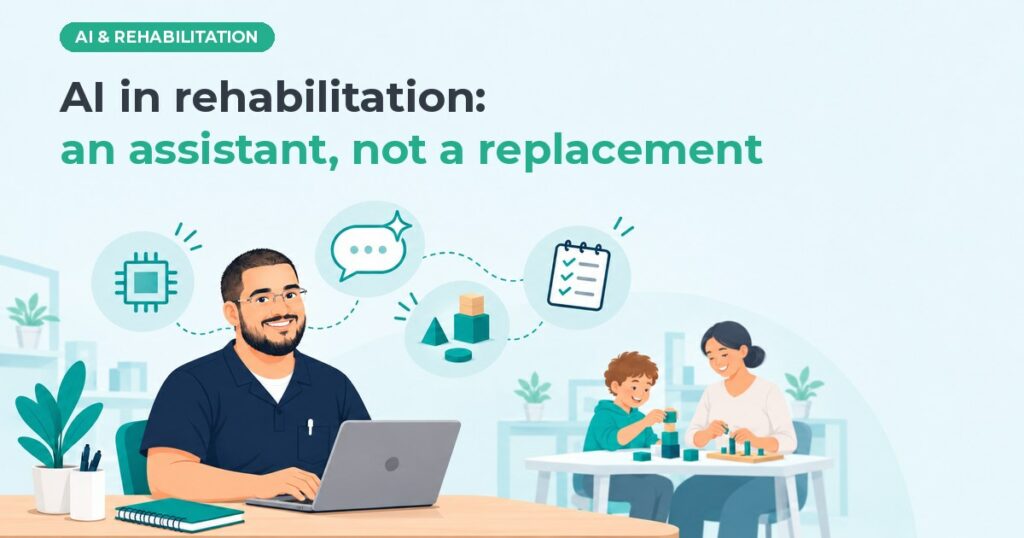
Artificial intelligence is gradually entering the daily work of rehabilitation professionals. Used well, it saves time; used badly, it can create a false sense of certainty. The right framing fits in one sentence: AI assists, the therapist decides.
What AI can bring
It helps mostly with preparation tasks: structuring a text from your own notes, suggesting variations of an activity, simplifying instructions, translating materials or summarising an article before you read it in detail.
What it does not replace
- Observing the person in a real situation.
- Clinical reasoning and the choice of goals.
- The therapeutic relationship and knowledge of the person’s context.
- Professional responsibility: an AI answer is a draft.
A simple rule to remember
AI proposes; the professional reviews, corrects and decides. It can be wrong with confidence, and its answers depend on the quality of the request. Vigilance is part of the skill.
Going further
To move into practice, start with one precise, repetitive task from your week: AI in occupational therapy: where to start?. This article is part of a short series on AI in rehabilitation, leading to the presentation of the online training “Artificial Intelligence & Occupational Therapy”.