

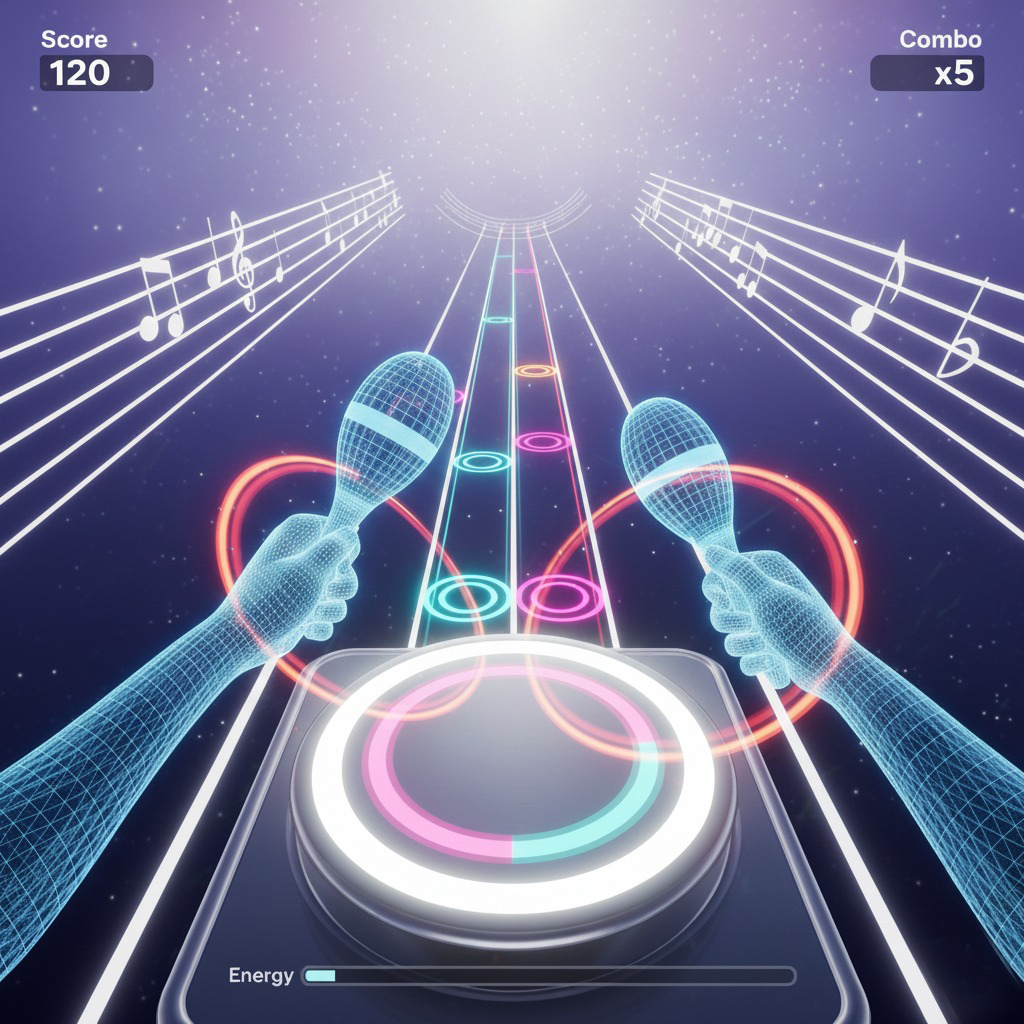
Physiotherapy is becoming increasingly data-rich and connected. Motion tracking, wearable sensors, artificial intelligence, virtual reality and remote rehabilitation can give physiotherapists new ways to observe movement, guide exercise and extend rehabilitation beyond the clinic.
The central objective, however, has not changed. Technology is useful when it helps a physiotherapist improve movement, function, participation and quality of life—not simply when it produces more data.
What is physiotherapy?
Physiotherapy, also called physical therapy in many countries, is a health profession focused on movement, physical function, mobility, recovery and participation.
Physiotherapists work with people across the lifespan who may experience limitations related to injury, surgery, neurological disorders, musculoskeletal conditions, cardiorespiratory disease, ageing, disability or other health conditions.
Depending on the clinical context, physiotherapy may involve movement and functional assessment, therapeutic exercise, strength and endurance training, mobility and gait training, balance rehabilitation, pain management, respiratory rehabilitation, education and self-management, prevention, rehabilitation after surgery or injury, assistive devices, home exercise programs, and remote monitoring and follow-up.
The exact scope of practice varies between countries and regulatory systems.
From hands-on rehabilitation to digitally supported movement analysis
Physiotherapy has historically relied heavily on observation, manual assessment, exercise prescription and interaction between the therapist and patient.
Over time, the profession incorporated increasingly sophisticated measurement tools, biomechanical analysis, standardized outcome measures, rehabilitation equipment and evidence-based clinical guidelines.
Digital physiotherapy is therefore not about replacing traditional physiotherapy. It represents another stage in the development of tools that can support clinical reasoning, patient education, exercise delivery and measurement.
World Physiotherapy has recognized digital practice as an important area for the profession, including telehealth, sensors, wearable devices, virtual reality and artificial intelligence. It also emphasizes that digital practice requires appropriate professional, regulatory and data-governance competencies.
Why is technology becoming important in physiotherapy?
A physiotherapist frequently needs to answer questions such as:
- Is the patient moving more?
- Is the movement becoming more symmetrical?
- Is range of motion improving?
- Is exercise being performed correctly?
- Is balance improving?
- Is gait becoming safer or more efficient?
- Is the patient actually completing the home program?
- Is increased repetition producing meaningful functional gains?
Traditional observation remains essential, but it has limitations. A therapist cannot continuously observe a patient outside the clinic, and subtle changes may be difficult to quantify consistently.
Digital technologies can potentially add another layer of information. The important word is potentially. A digital measurement is only useful when the measurement is sufficiently reliable, interpretable and clinically relevant.
Seven technologies changing physiotherapy
1. Camera-based motion tracking and computer vision
Computer vision systems can use standard or depth-sensing cameras to detect body landmarks and estimate movement.
Depending on the system, this can potentially provide information about joint positions, range of motion, repetitions, movement speed, exercise completion, body alignment, symmetry, reaching distance, squat depth, trunk movement and gait parameters.
This is particularly interesting because a camera may transform a relatively simple device such as a tablet, laptop or smartphone into a movement-interaction system.
A rehabilitation exercise can then respond directly to the patient’s body. For example, raising the arm may move an object inside a therapeutic game. The physiotherapist may simultaneously receive data about repetitions or movement amplitude.
However, computer-vision measurements can be influenced by camera position, lighting, clothing, occlusion, background, body morphology and algorithm performance. A calculated joint angle should therefore not automatically be considered interchangeable with a clinically validated goniometric measurement.
2. Wearable sensors
Wearable technologies include accelerometers, inertial measurement units, smartwatches and other body-worn sensors.
They may provide information about physical activity, steps, movement intensity, exercise frequency, gait, balance, limb movement and sedentary behavior.
One important advantage is that wearables can collect information outside the treatment room. This can help distinguish between what a patient can do during a supervised assessment and what they actually do during everyday life.
3. Virtual reality and virtual rehabilitation
Virtual reality can transform therapeutic exercise into an interactive environment.
The patient may reach toward objects, shift weight, maintain balance, step, squat, move the upper limb or perform functional actions while receiving immediate visual or auditory feedback.
For physiotherapists, VR can offer high-repetition practice, adjustable task difficulty, visual feedback, motivating environments, simulated functional tasks and controlled exposure to progressively complex activities.
The question should therefore not be “Does VR work?” A better clinical question is: For which patient, for which goal, using which VR intervention, at which dose, and compared with what?
4. Artificial intelligence
AI may support physiotherapy in several different ways. Algorithms may be used to identify patterns in movement data, classify exercises, detect selected movement deviations, adapt difficulty, support remote monitoring, estimate prognosis and help organize clinical information.
Generative AI may also help physiotherapists create patient education materials, exercise explanations, simplified instructions, documentation templates, visual materials, draft home programs and first versions of clinical summaries.
However, the current evidence does not justify treating AI as an autonomous physiotherapist. AI should support, not replace, clinical reasoning and professional accountability.
5. Telerehabilitation
Telerehabilitation enables parts of physiotherapy to be delivered remotely using video consultations, exercise platforms, mobile applications, sensors or connected rehabilitation systems.
A physiotherapist may remotely demonstrate an exercise, observe movement, adapt progression, provide education, review pain or fatigue, monitor adherence and discuss functional goals.
This does not mean that every physiotherapy intervention can be performed remotely. Some assessments, manual techniques, safety-sensitive activities or complex equipment interventions still require in-person care. The strongest model is often hybrid physiotherapy rather than purely remote physiotherapy.
6. Robotics and rehabilitation devices
Robotic technologies can support highly repetitive movement training and may provide assistance or resistance according to the patient’s performance.
Applications include gait rehabilitation, upper-limb training, post-stroke rehabilitation, spinal cord injury rehabilitation and strength or mobility support.
Robotics can generate large quantities of movement data and allow many repetitions. But access, cost, maintenance, setup time and the relationship between device-specific improvement and real-world function remain important considerations.
7. Mobile applications and digital exercise programs
Not every digital transformation requires expensive hardware.
Smartphones and tablets can support exercise videos, reminders, education, pain or symptom tracking, adherence monitoring, progression plans and communication with the therapist.
These systems can be particularly useful between sessions. The main challenge is maintaining clinical individualization. A generic exercise library should not replace appropriate assessment and progression.
Measuring movement: from observation to digital metrics
| Metric | Possible clinical relevance | Main limitation |
|---|---|---|
| Range of motion | Joint mobility and progression | Accuracy depends on measurement method |
| Repetitions | Exercise volume | Quantity does not equal movement quality |
| Movement speed | Motor control and performance | Faster is not always better |
| Symmetry | Comparison between sides | Normal symmetry varies |
| Trajectory | Movement strategy | Hard to interpret without context |
| Exercise time | Dose and tolerance | Does not show movement correctness |
| Gait parameters | Mobility and locomotion | Requires appropriate validation |
| Activity level | Real-world behavior | Activity does not equal functional quality |
| Adherence | Home-program participation | Completion does not guarantee correct performance |
Digital rehabilitation creates a major risk: confusing what is easy to measure with what is clinically important.
A patient may perform 100 repetitions with poor movement quality. Another may improve a sensor-derived range-of-motion value without becoming more independent when walking, climbing stairs or returning to work.
Physiotherapists therefore need to combine digital metrics with clinical examination and meaningful functional outcomes.
Three realistic clinical scenarios
Neurological rehabilitation: gait and balance after stroke
A patient recovering from stroke may perform weight-shifting, stepping and balance exercises using camera tracking or wearable sensors.
The physiotherapist may monitor number of steps, movement symmetry, exercise duration, weight-shift direction, balance errors and adherence.
Interactive exercises may increase repetitions and provide immediate feedback. But the therapist still needs to assess whether improvements transfer to walking safely in the home and community.
Musculoskeletal physiotherapy: knee rehabilitation after surgery
After knee surgery, a physiotherapist may use a digital exercise program combined with camera-based movement analysis.
The system may estimate knee flexion, exercise repetitions or squat depth. The therapist can use these data to complement pain assessment, swelling, strength, mobility, functional tests, confidence and return-to-activity goals.
The algorithm should support rather than override clinical interpretation.
Parkinson’s rehabilitation: movement amplitude and repetition
A person with Parkinson’s disease may practice large-amplitude movements, reaching, stepping or repeated sit-to-stand tasks within an interactive rehabilitation environment.
Technology can provide visual targets, repetition counts and immediate feedback. A physiotherapist may progressively modify the required movement amplitude, speed or cognitive demand.
The important outcome is not simply completing the digital task. The therapist must determine whether training supports safer and more effective movement in daily life.
How can technology support home exercise programs?
Home programs are central to many physiotherapy pathways. They also present several challenges: patients may forget exercises, exercises may be performed incorrectly, progression may be too slow or too difficult, adherence is difficult to observe, and printed instructions may be lost or misunderstood.
Digital platforms can provide video demonstrations, reminders, exercise logging and feedback. Motion tracking may go further by confirming whether the person is actually moving.
But even advanced tracking cannot always determine whether an exercise is appropriate on a specific day. Pain, fatigue, fear, dizziness or changes in health status may require professional reassessment.
Can AI reduce physiotherapists’ administrative workload?
Potentially.
AI and automation may assist with organizing notes, converting speech into text, generating patient-friendly explanations, summarizing structured exercise data, preparing educational materials and creating first drafts of documentation.
The appropriate workflow is: AI-assisted draft → physiotherapist review → clinical correction → professional validation.
AI should never invent measurements, clinical tests, diagnoses, contraindications or treatment responses. The physiotherapist remains responsible for the clinical record.
What does the evidence currently tell us?
Digital physiotherapy should not be discussed as a single intervention.
A video consultation, an inertial sensor, a VR balance game and an AI prediction model are fundamentally different technologies. Their evidence needs to be assessed separately.
Current research supports meaningful opportunities in areas including telerehabilitation, wearables, remote monitoring and some forms of virtual rehabilitation, but evidence quality and clinical effectiveness remain heterogeneous across conditions and technologies.
This means physiotherapists should distinguish between: technical feasibility → measurement validity → patient engagement → clinical improvement → functional improvement → real-world participation.
A technology can perform well at one level and poorly at another.
Eight questions before introducing a digital physiotherapy tool
- What clinical problem are we trying to solve?
- What functional outcome matters to the patient?
- Has the technology been validated for the measurement or decision we want to make?
- Does it improve access, adherence, exercise quality or clinical understanding?
- Is the technology accessible to this patient?
- What are the risks related to fatigue, falls, pain, privacy or incorrect exercise execution?
- How will the collected data influence treatment?
- Would a simpler tool achieve the same objective?
The physiotherapist of the future: more data, but still clinical reasoning
The future physiotherapist may have access to far more information than previous generations.
A therapist could potentially review movement trajectories, home exercise adherence, daily activity, range-of-motion trends, rehabilitation game performance, patient-reported outcomes and wearable data.
The challenge will not simply be collecting these data. The challenge will be deciding which data matter.
Digital competence is therefore becoming part of professional competence.
At Remotion, this perspective informs the development of interactive rehabilitation activities, camera- and sensor-based interaction, virtual environments and therapist-facing performance data.
The objective is not to automate physiotherapy. It is to give physiotherapists additional ways to engage patients, personalize therapeutic activities and understand performance while keeping clinical reasoning at the center of rehabilitation.
Frequently asked questions
Can motion tracking replace a physiotherapist’s assessment?
No. Motion tracking can provide additional quantitative information, but measurement accuracy varies between systems and does not capture the complete clinical context.
Is virtual reality better than conventional physiotherapy?
Not universally. Evidence differs according to the condition, intervention, outcome and comparison treatment. VR is best considered another rehabilitation tool rather than an automatic replacement for conventional therapy.
Can physiotherapy be performed entirely remotely?
Some patients and interventions can be managed extensively through telerehabilitation. Others require physical examination, manual intervention, equipment or direct safety supervision. Hybrid care is often the most flexible model.
Can AI prescribe physiotherapy exercises?
AI can generate suggestions, but safe prescription requires clinical assessment, consideration of contraindications, progression and professional accountability.
Are wearable data clinically meaningful?
They can be, particularly for activity and movement monitoring, but their interpretation depends on device validity, measurement context and the clinical question.
Selected references and further reading
- World Physiotherapy & INPTRA. Report of the Digital Physical Therapy Practice Task Force.
- Simmich J et al. Real-time video telerehabilitation shows comparable satisfaction and similar or better attendance and adherence compared with in-person physiotherapy: a systematic review. Journal of Physiotherapy, 2024.
- Artificial intelligence in physical rehabilitation: A systematic review.
- Latif A et al. Use of commercially available wearable devices for physical rehabilitation in healthcare: a systematic review. BMJ Open, 2024.
- Thakur A et al. The Effectiveness of Virtual Reality-Based Rehabilitation Versus Conventional Methods in Enhancing Functional Outcomes for Post-Operative Lower Limb Patients: A Systematic Review. Musculoskeletal Care, 2025.
- Alotibi FS et al. Virtual Reality for Patients With Chronic Musculoskeletal Pain and Disability: An Umbrella Review of Systematic Reviews. Health Science Reports, 2025.
- World Physiotherapy. International consensus on entrustable professional activities for digital physiotherapy practice.
- Artificial Intelligence in Physical, Occupational and Neuro-Rehabilitation: Clinical Effectiveness, Prognostic Performance, and Pre-Implementation Feasibility — A Systematic Review.