

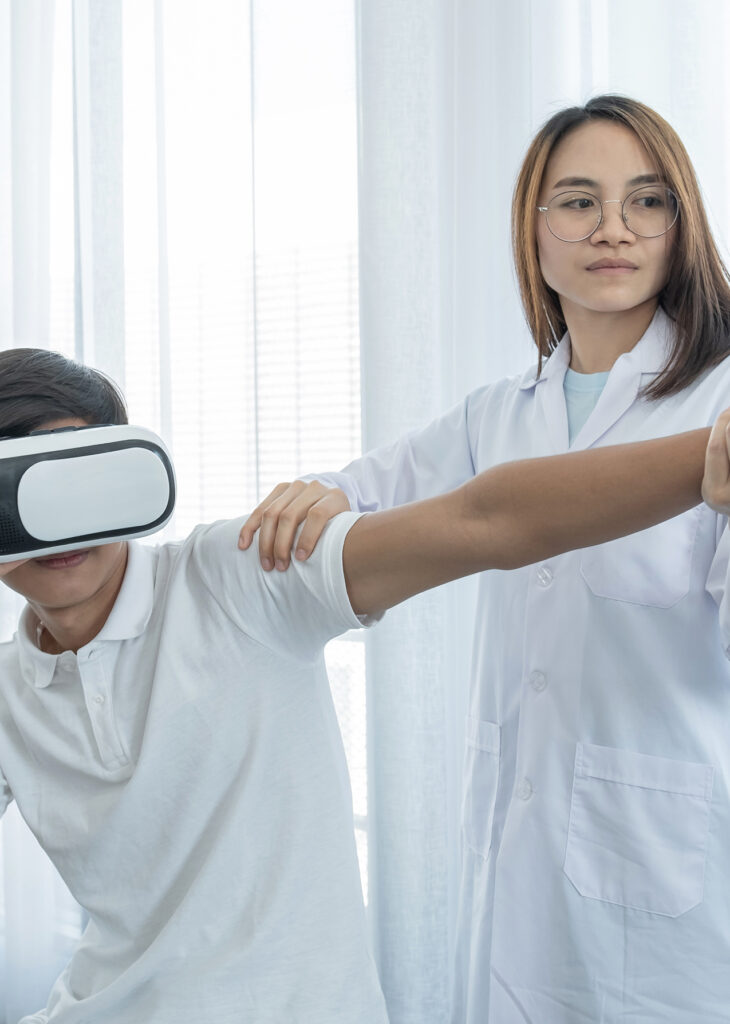
Occupational therapy is evolving—but its central purpose remains the same: enabling people to participate in meaningful everyday activities. Digital tools can expand how occupational therapists assess function, design interventions, engage clients and follow progress. Their value depends on whether they improve occupational performance, not simply whether they introduce a new screen or headset.
What is occupational therapy?
Occupational therapy (OT) is a person-centred health profession concerned with enabling participation in occupations: the activities people need, want or are expected to do. These include dressing, eating, studying, working, playing, managing a home and engaging in community life. Occupational therapists consider the interaction between the person, their occupations and their physical, social and cultural environments.
OT may involve activity analysis, environmental adaptation, assistive technology, rehabilitation, education, compensatory strategies and collaboration with families and other professionals. Its scope extends across pediatrics, neurological rehabilitation, physical health, mental health, geriatrics and community practice. Professional responsibilities and permitted interventions vary by country.
From purposeful activity to digital occupation: a short history
Occupational therapy emerged as a distinct profession in the early twentieth century, drawing on moral treatment, arts and crafts, rehabilitation and the therapeutic use of purposeful activity. Early practitioners used everyday tasks, crafts and adapted equipment to support function and participation. During and after the world wars, rehabilitation needs accelerated the development of the profession. Later decades brought more formal occupational science, standardized assessment, assistive technology, evidence-informed practice and community-based approaches.
Technology is therefore not a complete departure from OT tradition. Adaptive tools, environmental modifications and new ways of performing activities have long been central to practice. What has changed is the range of digital environments and the amount of performance information they can potentially capture.
What challenges can digital technology help address?
Therapists often need to balance meaningful, individualized intervention with limited session time, documentation requirements, variable patient engagement and inconsistent access to services. Some everyday activities are difficult to reproduce safely or repeatedly in a clinic. Home programs may be hard to supervise, while changes in performance can be difficult to describe consistently.
Technology can help with these problems—but only when it is accessible, clinically appropriate and integrated into an occupational therapy plan. A higher game score is not automatically evidence of improved dressing, cooking or community participation.
Seven technologies changing occupational therapy
1. Tablets and interactive applications
Tablets can deliver graded cognitive, perceptual, communication and motor activities; support visual schedules; provide accessible instructions; and facilitate home-practice materials. Touch interfaces can be useful when matched to a person’s visual, motor and cognitive abilities. Clinicians should check whether a digital task transfers to the occupation being targeted and whether the device itself creates barriers.
2. Camera-based motion tracking and computer vision
Camera systems can detect body or hand movement and use it to control interactive activities. Depending on the hardware and validation, they may estimate repetitions, movement trajectories, timing or range of motion. This may support graded reaching tasks, bilateral coordination and active participation. Camera measurements can be affected by lighting, occlusion, calibration, clothing, positioning and algorithmic error; they should not be treated as equivalent to validated clinical measurements without evidence.
3. Virtual reality (VR)
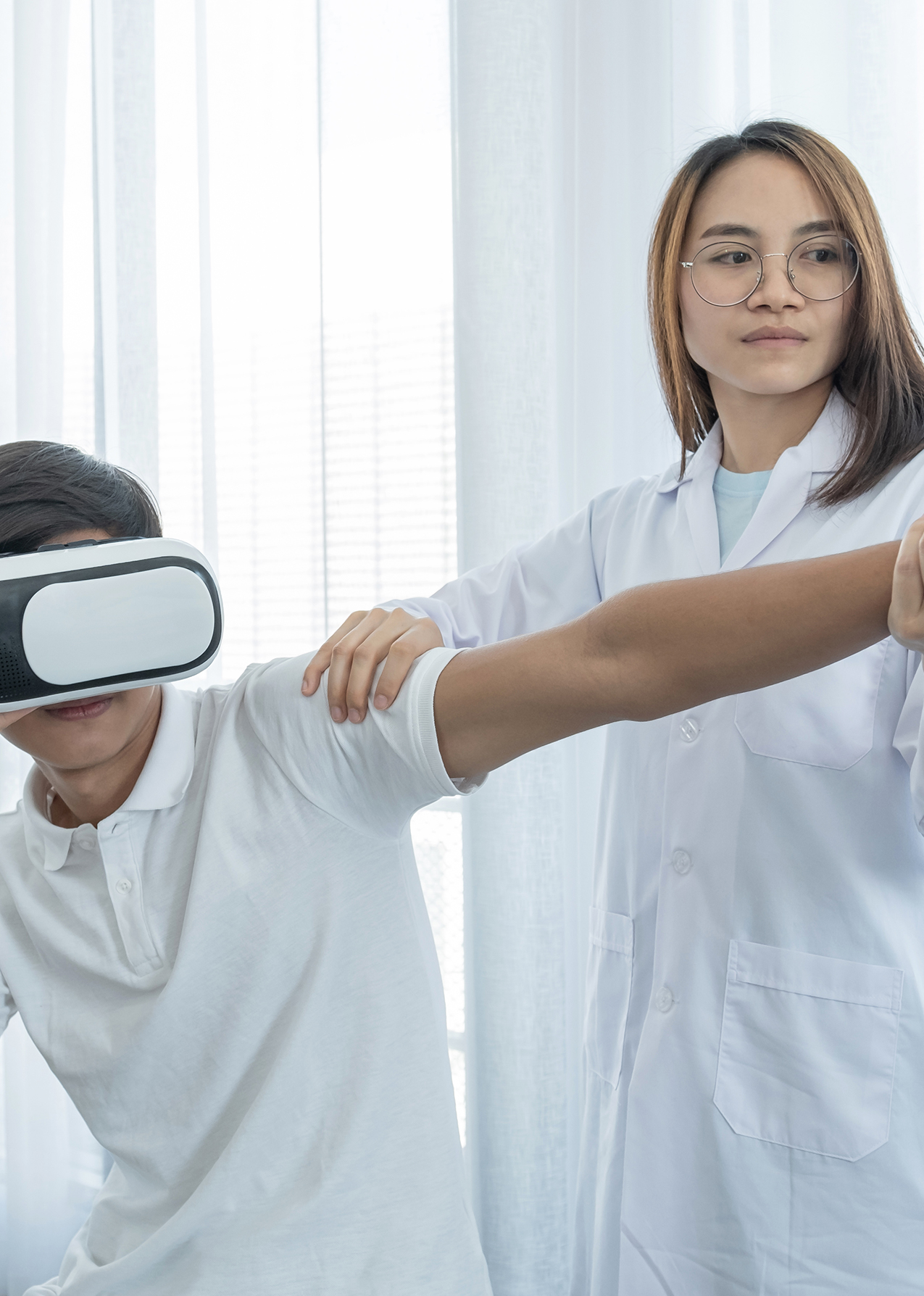
VR places the user in a computer-generated environment, sometimes through an immersive headset. It can make repetitive practice more engaging and create scenarios that are hard to reproduce in a treatment room. Examples include locating items on shelves, practicing reaching, following multi-step instructions and navigating simulated environments. Therapists should grade cognitive demands, movement, duration and sensory load, and watch for dizziness, fatigue, cybersickness or distress.
4. Augmented and mixed reality (AR/MR)
AR overlays digital information on the real world, while MR can anchor interactive virtual objects within a physical environment. These approaches may preserve real-world context while providing cues, feedback or simulated objects. They are promising for task sequencing and contextualized practice, but usability and clinical effectiveness vary considerably by application.
5. Artificial intelligence and generative AI
AI can support pattern recognition, adaptive systems and some forms of assessment. Generative AI may help therapists draft exercise ideas, patient-friendly instructions, visual materials, educational resources or documentation templates. These outputs must be reviewed for accuracy, appropriateness and bias. Identifiable health information should not be entered into unapproved services; local data-protection rules and organizational policies apply.
6. Wearables, sensors and assistive technologies
Wearables may capture activity, movement or physiological signals in daily contexts. Smart-home controls, alternative input devices, reminders and environmental adaptations can directly enable occupational participation. The most useful technology may be a simple adapted switch rather than an immersive system.
7. Telerehabilitation and hybrid care
Video visits, digital home programs and connected therapeutic tools can extend occupational therapy beyond the clinic. Remote observation may reveal contextual barriers in the person’s actual home or work environment. Hybrid models can combine in-person evaluation and hands-on care with remote coaching and follow-up. Evidence supports some telehealth-delivered OT interventions, but suitability varies by population, goal and intervention.
Technology across the OT process
| OT stage | Potential digital contribution | Clinical safeguard |
|---|---|---|
| Occupational profile | Accessible questionnaires, activity diaries and remote interviews | Preserve client priorities and context |
| Assessment | Video observation, digital tasks, movement data | Use validated measures when clinical claims depend on scores |
| Goal setting | Shared visual goals and progress plans | Prioritize meaningful occupations |
| Intervention | Graded games, VR scenarios, assistive devices and home programs | Match task demands to capacity and safety |
| Review | Session summaries, adherence and trend visualization | Interpret metrics alongside real-world function |
| Documentation | Templates, dictation and AI-assisted drafts | Therapist verifies every clinical statement |
Three realistic clinical scenarios
Pediatric OT: practicing coordination through play
A child working on bilateral coordination and motor planning may interact with a projected or tablet-based activity involving reaching, timing and sequencing. The therapist adjusts speed, visual complexity and task demands. The session remains occupation-centred by connecting the practice to play, school participation or self-care goals rather than relying on game performance alone.
Neurological rehabilitation: simulated shopping after stroke
An adult recovering from stroke may practice finding products, following a shopping list and managing distractors in a simulated supermarket. A therapist can adapt task complexity and observe attention, planning and upper-limb use. The next step is to assess whether the person can apply those skills in a real or supported shopping task. Simulated success does not prove community independence.
Geriatric OT: supporting everyday independence
For an older adult with mobility or cognitive challenges, technology might support seated reaching, structured reminders or home-based coaching. The occupational therapist selects tools based on personal goals, vision, fatigue, balance, accessibility and caregiver support. Low-tech environmental adaptations may remain the most effective option.
Can digital tools reduce occupational therapists’ administrative workload?
Potentially. Templates, speech-to-text, automated scheduling, structured exercise libraries and carefully supervised AI drafting may reduce repetitive preparation and paperwork. However, new systems can also increase setup time, training requirements and documentation burden. Organizations should evaluate actual time saved, interoperability, error rates and clinician satisfaction instead of assuming automation is beneficial.
A safe workflow is to generate a draft, compare it with clinical notes and observations, correct errors, and approve it as the responsible professional. AI should not independently invent measurements, diagnoses or clinical progress.
What does scientific evidence say?
Research on digital OT is growing, but findings depend on the technology, clinical population, intervention dose and outcomes measured. A 2025 scoping review of AI in occupational therapy mapped applications in motor rehabilitation, assessment, assistive technology and telerehabilitation, while identifying cost, training and ethical barriers. A 2025 systematic review of OT telehealth interventions synthesized 43 studies and reported stronger support for some chronic-condition interventions than for other populations. Earlier reviews likewise cautioned that remote care is not universally superior to face-to-face services.
It is essential to distinguish feasibility and engagement outcomes from validated changes in occupational performance, participation and quality of life. Therapists should examine study design, sample size, follow-up duration and whether outcomes reflect meaningful daily activities.
Practical checklist before adopting a tool
- Define the occupational goal and the person’s priorities.
- Identify the specific problem the technology is expected to solve.
- Check accessibility, sensory tolerance, fatigue, safety and contraindications.
- Review evidence for the intended population and outcome.
- Check privacy, security, consent and relevant regulatory status.
- Plan setup, training, maintenance and non-digital alternatives.
- Measure both digital task performance and real-world occupational outcomes.
- Reassess whether the tool adds value after implementation.
The future: an augmented occupational therapist, not an automated replacement
The most promising future combines occupational therapists’ clinical reasoning with better activity design, accessible digital experiences and interpretable data. AI may assist preparation and documentation; immersive environments may make practice more flexible; motion tracking may provide additional observations. None of these removes the need to understand the person, their context and what participation means to them.
At Remotion, this human-centred perspective informs work on interactive rehabilitation activities, immersive daily-life scenarios and therapist-guided adaptation. Product-specific capabilities should always be assessed against the needs of the service and the available clinical evidence.
Frequently asked questions
Will AI replace occupational therapists?
AI can assist selected tasks, but occupational therapy relies on therapeutic relationships, contextual reasoning, shared decision-making and accountability that cannot be delegated wholesale to an automated system.
Is VR suitable for every occupational therapy patient?
No. Suitability depends on clinical goals, accessibility, sensory tolerance, balance, medical considerations and the specific VR application.
Can game scores measure functional improvement?
They can describe performance within a game. Demonstrating functional improvement requires relevant, preferably validated measures and observation of real-world occupations.
Can occupational therapy be delivered remotely?
Many elements can, including coaching, environmental assessment, education and selected interventions. Some needs still require in-person assessment, equipment fitting or hands-on support.
Selected references and further reading
- Rockwell L. The role of occupational therapy in health technology. OT Practice, 2025.
- Smith RO. Technology and Occupation: Past, Present, and the Next 100 Years of Theory and Practice. AJOT, 2017.
- Bulan PM et al. A Scoping Review on Artificial Intelligence in Occupational Therapy. OTJR, 2025.
- Molitor WL et al. Occupational Therapy Telehealth Interventions Across Populations From 2019 to 2022: A Systematic Review. AJOT, 2025.
- Feldhacker DR et al. Telehealth Interventions Within the Scope of Occupational Therapy Practice: A Systematic Review. AJOT, 2022.
- Hung GKN, Fong KNK. Effects of telerehabilitation in occupational therapy practice: A systematic review. 2019.
- Segal A et al. Digital Skills Assessments in Occupational Therapy: A Scoping Review. AJOT, 2026.
- Thomure R. The current state of AI: Its role in treatment planning. OT Practice, 2024.